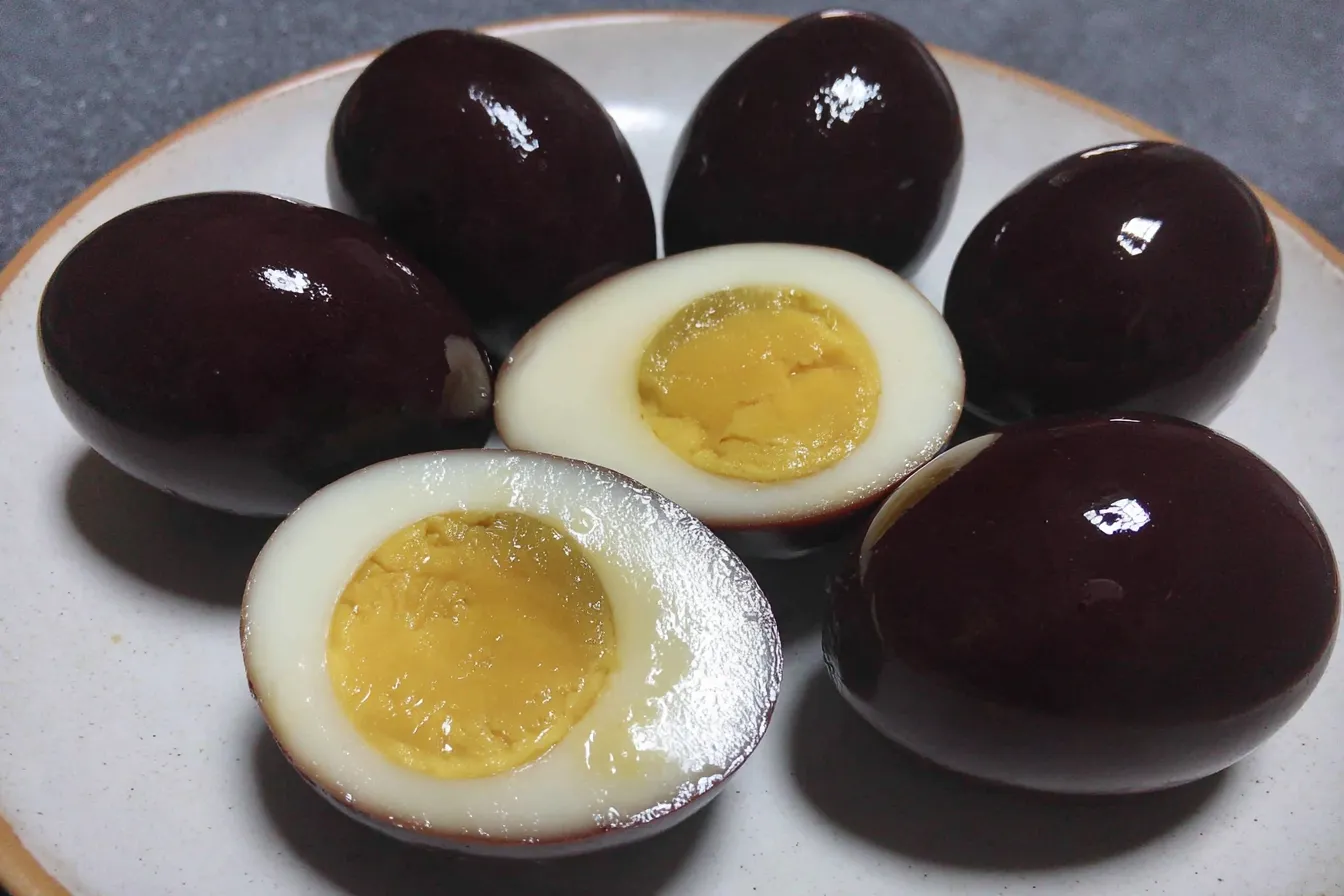
If you’ve never tried a Balsamic Pickled Egg Recipe, let me just say—this might be your new happy snack.
It’s tangy, slightly sweet, deeply flavorful, and honestly… kind of addictive in the best way.
This is one of those recipes that feels fancy but secretly takes very little effort. Perfect for busy weeks, protein-packed snacking, or when you want something different waiting for you in the fridge. And bonus? These eggs turn the most gorgeous deep, dramatic color thanks to the balsamic vinegar. Pretty food just tastes better—don’t argue with me on that.
I’m Mounia, and recipes like this are exactly why I love simple, old-school methods that do the heavy lifting for us. Minimal work. Maximum flavor. Let’s do this.
Table of Contents
Why You’ll Love This Balsamic Pickled Egg Recipe
- Set-it-and-forget-it simple – once they’re in the fridge, the magic happens on its own
- Protein-packed snack that actually feels exciting
- Budget-friendly with pantry staples
- Perfect for meal prep (hello, grab-and-go lunches)
- Bold flavor without being overpowering
These eggs are tangy but balanced, savory with just a hint of sweetness. The kind of snack that makes you open the fridge “just to check” and somehow walk away eating two eggs. No judgment.
Ingredients You’ll Need
Here’s the beauty of this Balsamic Pickled Egg Recipe—short ingredient list, big payoff.
Main Ingredients
- 7–10 hard-boiled eggs (for 1-quart wide-mouth jar)
or - 8 hard-boiled eggs, divided between 2 pint wide-mouth jars
- 1 cup balsamic vinegar
- 1 cup water
- 2 tablespoons sugar
- 2 tablespoons salt
Optional (But Highly Recommended)
- Sliced onions
- Garlic (about 1 teaspoon minced garlic works great)
Optional add-ins are where you can really make this recipe your own. Think of them as accessories for your eggs.
Step-by-Step: How to Make Balsamic Pickled Eggs
Step 1: Hard-Boil the Eggs
Start by hard-boiling your eggs. Use your favorite method—stovetop or Instant Pot both work beautifully. Once cooked, let them cool completely and peel them.
Pro tip: Older eggs peel easier. If peeling eggs feels like a personal attack, you’re not alone.
Step 2: Add Eggs to the Jar
Place the peeled eggs into a clean wide-mouth jar (or jars). Make sure they’re packed snugly but not smashed together like rush-hour traffic.
If you’re using onions or garlic, layer them in with the eggs.
Step 3: Make the Pickling Brine
In a medium pot, combine:
- Balsamic vinegar
- Water
- Salt
- Sugar
Heat gently, stirring until the salt and sugar fully dissolve. No need to boil aggressively—just warm enough to blend everything smoothly.
Step 4: Pour Brine Over the Eggs
Carefully pour the warm brine over the eggs, covering them completely.
Step 5: Leave a Little Headspace
Fill the jar, leaving about ¼ inch of headspace at the top. This helps everything seal properly and keeps things tidy.
Step 6: Rest Before Sealing
Let the jar sit uncovered for about 30 minutes. This helps prevent pressure buildup and gives everything a moment to settle.
Step 7: Refrigerate
Once the eggs cool to room temperature, seal the jar and place it in the refrigerator.
Step 8: Wait (This Is the Hard Part)
You can eat them after a couple of hours…
But for best flavor? Let them pickle for 5–7 days.
This is where the deep balsamic flavor really shines.
Step 9: Storage
Pickled eggs will keep 3–4 months in the refrigerator when stored properly. Which sounds like a long time—until you realize how fast they disappear.
Helpful Tips for the Best Pickled Eggs
- Too strong? Add a splash more water next time to mellow the vinegar.
- Too mild? Let them sit longer. Flavor builds with patience.
- Cloudy brine? Totally normal with balsamic vinegar—don’t panic.
- Want spice? A pinch of red pepper flakes goes a long way.
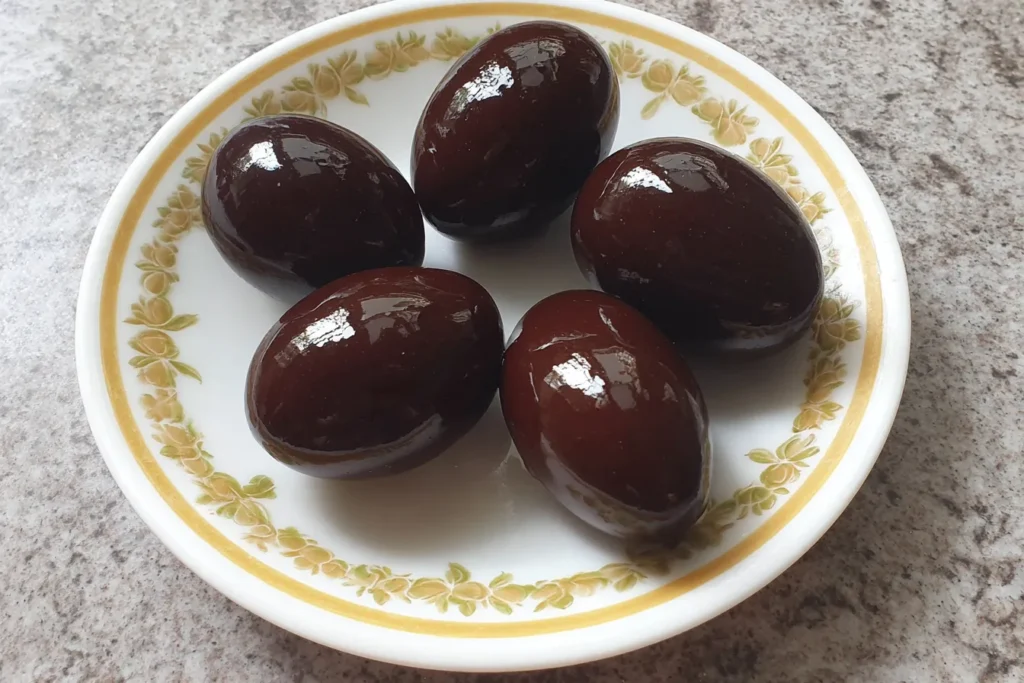
If your brine looks dark and dramatic, congratulations—you’re doing it right.
A Little Kitchen Story
The first time I made this Balsamic Pickled Egg Recipe, it was during one of those weeks—too many errands, not enough time, and zero patience for complicated cooking.
I needed something easy, filling, and already done when hunger hit. These eggs saved me. One jar in the fridge, and suddenly I had snacks, quick lunches, and protein boosts without cooking again. That’s my kind of kitchen win.
Frequently Asked Questions
Can I make this Balsamic Pickled Egg Recipe without sugar?
Yes! You can reduce the sugar or swap it for honey or maple syrup. Just know the flavor will be a bit sharper.
How soon can I eat pickled eggs?
They’re edible after a few hours, but waiting 5–7 days gives you the best flavor.
Can I reuse the brine?
I don’t recommend it for safety and flavor reasons. Fresh brine = better results.
What do balsamic pickled eggs taste like?
Tangy, savory, slightly sweet, and deeply rich. Think bold but balanced.
Do pickled eggs need to stay refrigerated?
Yes—this is a refrigerator pickling recipe, not shelf-stable.
Ready to Fall in Love with This Recipe?
If you’re craving something simple, satisfying, and a little different, this Balsamic Pickled Egg Recipe checks every box. It’s easy, cozy, and surprisingly versatile—perfect for busy days when you still want real food that feels special.
Pop a jar in your fridge, let time do the work, and enjoy having a bold, protein-packed snack waiting for you whenever hunger strikes.
Make It a Little Egg-stra Special
If you’re anything like me, once you fall in love with a simple recipe like this Balsamic Pickled Egg Recipe, you start looking for other easy, cozy dishes that fit right into the same rhythm. These favorites pair beautifully with pickled eggs—whether you’re building a brunch board, planning lunches ahead, or just keeping tasty protein options ready in the fridge.
- Love bold, classic flavors? These classic deviled eggs that always disappear fast are a natural next step and perfect for gatherings big or small.
- Craving something fun with a little kick? You’ll adore these elote deviled eggs inspired by Mexican street corn alongside your balsamic pickled eggs.
- Hosting in the fall or just feeling festive? These pumpkin patch deviled eggs made for cozy gatherings add seasonal charm to any spread.
- If high-protein meal prep is your thing, these easy cottage cheese egg bites for busy mornings are a must-try.
- And if you’re curious to see another take on this recipe, this classic balsamic pickled eggs recipe from AllRecipes is a great source of extra inspiration.
Think of this as your little egg-lover’s corner—simple, comforting recipes that make everyday meals feel just a bit more special.
Print
Balsamic Pickled Egg Recipe
- Total Time: 25 minutes
- Yield: 8 servings (1 egg per serving) 1x
Description
This Balsamic Pickled Egg Recipe is an easy, protein-packed snack made with simple pantry ingredients. Tangy, slightly sweet, and perfect for meal prep, these eggs get better with time in the fridge.
Ingredients
7–10 hard-boiled eggs (for a 1-quart jar)
or 8 hard-boiled eggs (for 2 pint jars)1 cup balsamic vinegar
1 cup water
2 tablespoons sugar
2 tablespoons salt
Optional: sliced onions
Optional: 1 teaspoon minced garlic
Instructions
Hard-boil the eggs using your preferred method. Let them cool completely, then peel.
Place the peeled eggs into a clean wide-mouth jar. Add onions or garlic if using.
In a saucepan, combine balsamic vinegar, water, sugar, and salt. Heat gently until the sugar and salt dissolve.
Carefully pour the warm brine over the eggs, fully covering them.
Leave about ¼ inch of headspace at the top of the jar.
Let the jar sit uncovered for 30 minutes, then seal with a lid.
Refrigerate once cooled to room temperature.
Eggs can be eaten after a few hours, but best flavor develops after 5–7 days.
Notes
Flavor deepens the longer the eggs sit.
Store eggs fully submerged in brine at all times.
Always keep refrigerated; this is not a shelf-stable recipe.
- Prep Time: 15 minutes
- Cook Time: 10 minutes
- Category: Snack, Appetizer
- Method: Pickling, No-Bake
- Cuisine: American
Nutrition
- Serving Size: 1 egg
- Calories: 80
- Sugar: 2 g
- Sodium: 380 mg
- Fat: 5 g
- Saturated Fat: 1.5 g
- Unsaturated Fat: 3 g
- Trans Fat: 0 g
- Carbohydrates: 3 g
- Fiber: 0 g
- Protein: 6 g
- Cholesterol: 185 mg