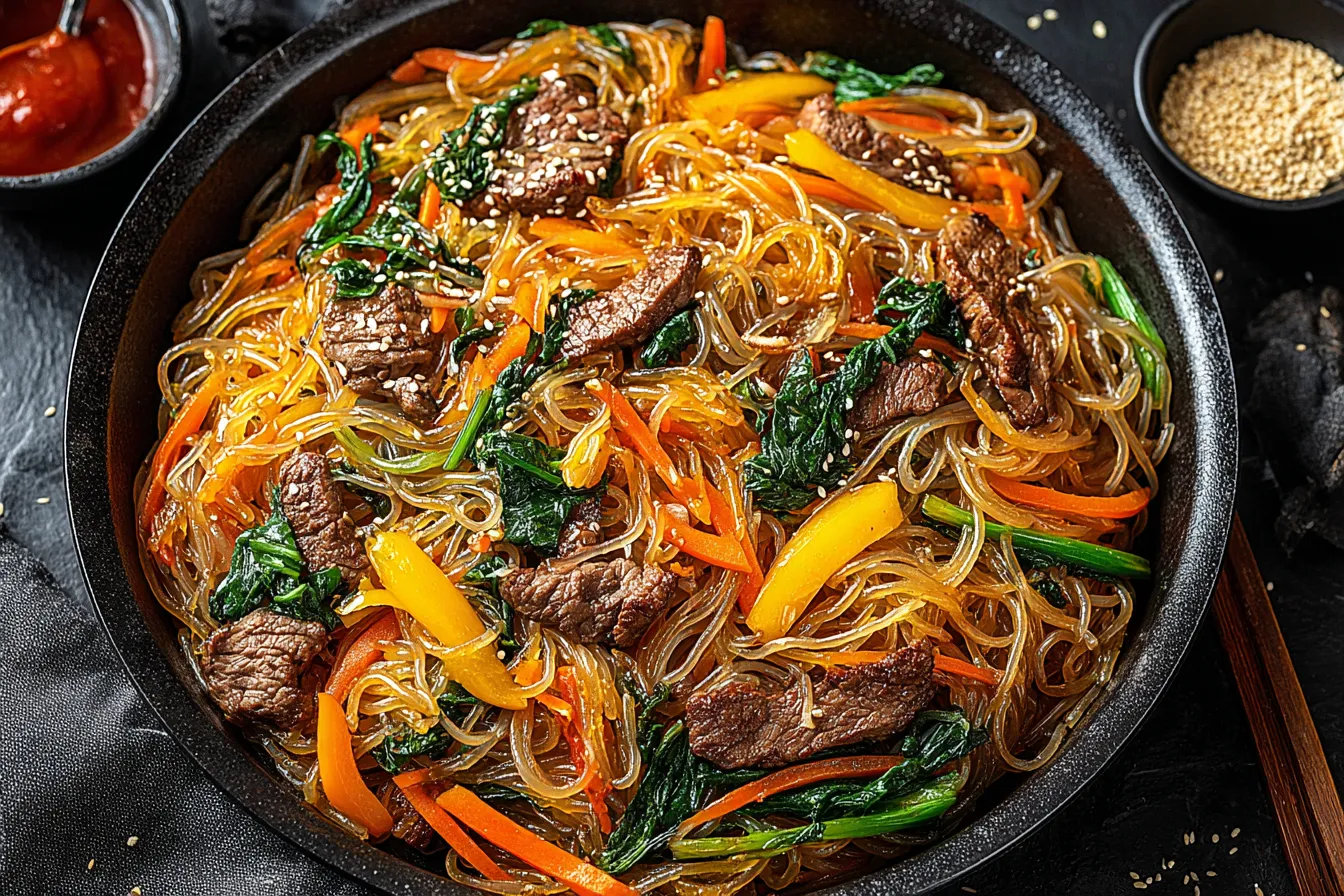
If you’ve been craving a bowl of something warm, colorful, and downright mood-lifting, this Authentic Korean Japchae Noodles Recipe will feel like a cozy hug at the end of a long day. Japchae has been one of my go-to dishes on weeks when life feels like a blur—kids, work, errands, and the never-ending question: “What’s for dinner?”
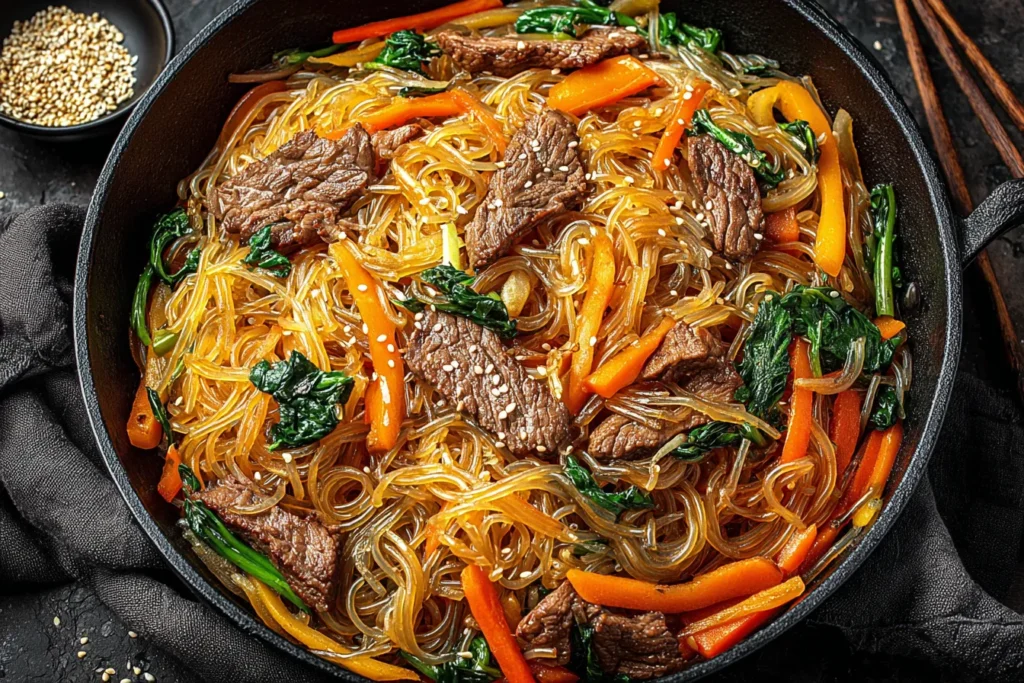
And let me tell you, these glossy, springy sweet-potato noodles solve that problem beautifully. They soak up all the savory soy-sesame goodness while still keeping their signature chewy bite. Pair that with tender beef, soft onions, bright carrots, and silky spinach, and suddenly dinner feels special… without you hovering over the stove for hours.
This dish may look fancy, but trust me—it’s weeknight-friendly, budget-friendly, and picky-eater-approved.
Table of Contents
Why You’ll Love This Authentic Korean Japchae Noodles Recipe
There’s a reason Japchae has been celebrated in Korean kitchens for centuries. For busy home cooks like us, it checks all the boxes:
✔ Simple, approachable steps
✔ Flexible ingredients
✔ Naturally gluten-free noodles
✔ A flavor payoff that tastes like you ordered from your favorite Korean restaurant
Plus, this Authentic Korean Japchae Noodles dish practically cooks itself once you prep the veggies. That’s the kind of dinner I love—high return with minimal effort. It’s the philosophy behind so many recipes on SlowCookersRecipes.com: let the ingredients do the work while you take a moment to breathe.
But enough small talk… let’s cook.
Ingredients You’ll Need
Here’s everything that transforms this classic Korean favorite into a hearty, colorful meal:
- 2 lb thin-sliced beef (swap with chicken, tofu, or shrimp)
- 1 lb Korean sweet potato noodles (glass noodles)
- 3 medium carrots, julienned
- 1 large white onion, thinly sliced
- 1/2 bunch green onions, chopped
- 6 garlic cloves, minced
- 1/2 lb spinach leaves
- 4 tbsp sesame oil, divided
- 1 tbsp olive oil
- 6 tbsp soy sauce (or tamari for gluten-free)
- 3 tbsp brown sugar
How to Make Authentic Korean Japchae Noodles (Step-by-Step)
1. Cook the Sweet Potato Noodles
Bring a large pot of water to a boil, add a drizzle of olive oil (this helps with sticking), and cook the noodles for just 5–6 minutes.
Drain and set aside.
Tip: If they clump, don’t panic—these noodles like to cuddle. A tiny splash of sesame oil will loosen them right up.
2. Sear the Beef
In a hot skillet, cook the thin-sliced beef until brown and tender. Season with:
- ½ the soy sauce
- ½ the sesame oil
- ½ the brown sugar
Once cooked, set aside and try not to snack on it. (I fail at this step almost every time.)
3. Sauté the Veggies
In another large skillet, heat the olive oil. Add your carrots and onions first since they need more time to soften.
Once they’re tender and fragrant, pour in the remaining soy sauce, sesame oil, and brown sugar. Toss in the garlic and green onions and cook for just one more minute—long enough for the garlic to bloom but not burn.
4. Add the Spinach
Mix the spinach into the hot veggies so it wilts perfectly. No need to overthink it; spinach melts like magic.
5. Bring Everything Together
In a large mixing bowl (or pot), combine the cooked noodles, beef, and veggies.
Toss well so every noodle gets coated in that shiny, savory-sweet sauce.
Serve warm, garnished with a little extra green onion for brightness.
And that’s it—five simple steps to a gorgeous, crowd-pleasing dish.
Mounia’s Tips for Perfect Japchae Every Time
Think of these as the little “chef secrets” that save you when dinner tries to go rogue:
Don’t skip sautéing each ingredient separately
It keeps everything crisp, vibrant, and flavorful instead of turning into one big veggie mush.
Add sesame oil at the end for peak aroma
It’s like adding perfume… but edible.
Want spice? Add gochujang
Just a spoonful turns this into a sweet-spicy dream.
Make it vegetarian
Swap in mushrooms, tofu, or extra veggies. You still get the same satisfying experience.
Meal-prep approved!
Japchae tastes incredible the next day—hot or cold. Sometimes even better. (Isn’t that the best?)
A Little Story From My Kitchen
The first time I made Japchae at home, I was convinced it would be complicated. My kitchen counter looked like a rainbow explosion of veggies, noodles, and seasonings. But once things started sizzling, I realized how comforting this dish is to make.
It reminds me of the cooking philosophy I share often on my blog: meals don’t have to be fussy to feel special. Japchae saved me during a week filled with appointments, deadlines, and one sick kiddo. I tossed everything together at the end and thought, “Wow… that was easier than making spaghetti.”
Since then, it’s been a go-to recipe when I want something joyful, colorful, and deeply satisfying—without needing hours in the kitchen.
FAQs About Authentic Korean Japchae Noodles
Can I make Japchae without beef?
Absolutely. This Authentic Korean Japchae Noodles recipe works great with tofu, chicken, shrimp, or no protein at all. Mushrooms are especially delicious.
Can I prep ingredients ahead of time?
Yes! You can chop vegetables and cook the noodles the night before. Store everything separately so the noodles don’t get soggy.
How do I store leftovers?
Keep your Japchae in an airtight container in the fridge for up to 4–5 days. Reheat in a skillet with a splash of soy sauce or sesame oil.
Can I make it gluten-free?
Sweet potato noodles are naturally gluten-free—just swap soy sauce for tamari.
What if my noodles stick together?
A tiny drizzle of sesame oil and a quick toss will fix that instantly.
Bring Joy to Your Table With Japchae
This Authentic Korean Japchae Noodles Recipe is more than a beautiful dish—it’s a feel-good meal that fits into real life. It feeds a crowd, reheats like a dream, and brings color and comfort to even the busiest weeknight.
Whether you’re hosting friends, meal-prepping for the week, or just treating yourself to something delicious, Japchae is one of those dishes that makes the whole house smell like happiness.
Try it once, and I promise it will earn a permanent spot in your recipe rotation. Now go enjoy those glossy noodles—you deserve it.
More Cozy Recipes You’ll Love
If this bowl of Japchae brought a little comfort to your day, here are a few more warm and flavorful dishes you might enjoy next. Each one brings its own kind of kitchen joy—whether you’re craving something saucy, hearty, or perfectly slurpable.
- For another comforting noodle favorite, try the rich and satisfying Crock-Pot Chicken Ramen.
- When you want something quick, bold, and flavorful, the Korean Ground Beef Bowl makes an easy weeknight win.
- If you’re in the mood for something creamy and soothing, the Slow Cooker Potato Leek Soup is pure comfort in a bowl.
- And for a cozy pasta dish with a little kick, you’ll love the Slow Cooker Cajun Chicken Alfredo.
- If you’d like to explore even more traditional Korean flavors, you may enjoy this beautifully detailed guide to Japchae from My Korean Kitchen: Korean Glass Noodle Stir-Fry (Japchae).
These delicious recipes make wonderful companions to your Japchae journey—perfect for busy nights, relaxed weekends, or anytime you want a homemade meal that feels like a treat.
Print
Authentic Korean Japchae Noodles Recipe: A Comforting 5-Step Favorite
- Total Time: 10 servings
- Yield: Dinner, Noodles, Main Dish
Description
A comforting and colorful dish made with chewy Korean sweet potato noodles, tender beef, fresh vegetables, and a savory-sweet soy sesame sauce. This Authentic Korean Japchae Noodles Recipe comes together in 5 simple steps and is perfect for weeknights, gatherings, or meal prep.
Ingredients
2 lb thin-sliced beef (or chicken, tofu, or shrimp)
1 lb Korean sweet potato noodles (glass noodles)
3 medium carrots, julienned
1 large white onion, thinly sliced
1/2 bunch green onions, chopped
6 garlic cloves, minced
1/2 lb spinach leaves
4 tbsp sesame oil, divided
1 tbsp olive oil
6 tbsp soy sauce (or tamari for gluten-free)
3 tbsp brown sugar
Instructions
Bring a large pot of water to a boil, add a splash of olive oil, and cook the sweet potato noodles for 5–6 minutes. Drain and set aside.
In a hot skillet, sear the beef until browned. Season with half the soy sauce, sesame oil, and brown sugar. Set aside.
Heat olive oil in another skillet. Sauté the carrots and onions until softened.
Add the remaining soy sauce, sesame oil, and brown sugar. Stir in garlic and green onions and cook for 1 minute.
Add spinach and stir until wilted.
Toss the cooked noodles, beef, and vegetables together in a large bowl until well combined.
Serve warm with extra green onions or sesame seeds.
Notes
Swap beef for tofu or mushrooms for a vegetarian version.
Add gochujang if you want a spicy kick.
A drizzle of sesame oil at the end enhances flavor and prevents noodles from sticking.
Dish reheats well and is ideal for meal prep.
- Prep Time: 30 minutes
- Cook Time: 1 hour
- Category: Stovetop
- Method: Korean
- Cuisine: Korean
Nutrition
- Serving Size: 1 serving
- Calories: 489
- Sugar: 7g
- Sodium: 820mg
- Fat: 15g
- Saturated Fat: 3g
- Unsaturated Fat: 10g
- Trans Fat: 0g
- Carbohydrates: 61g
- Fiber: 3g
- Protein: 27g
- Cholesterol: 48mg